Serving Torrance, CA and surrounding areas. (424) 318-3290
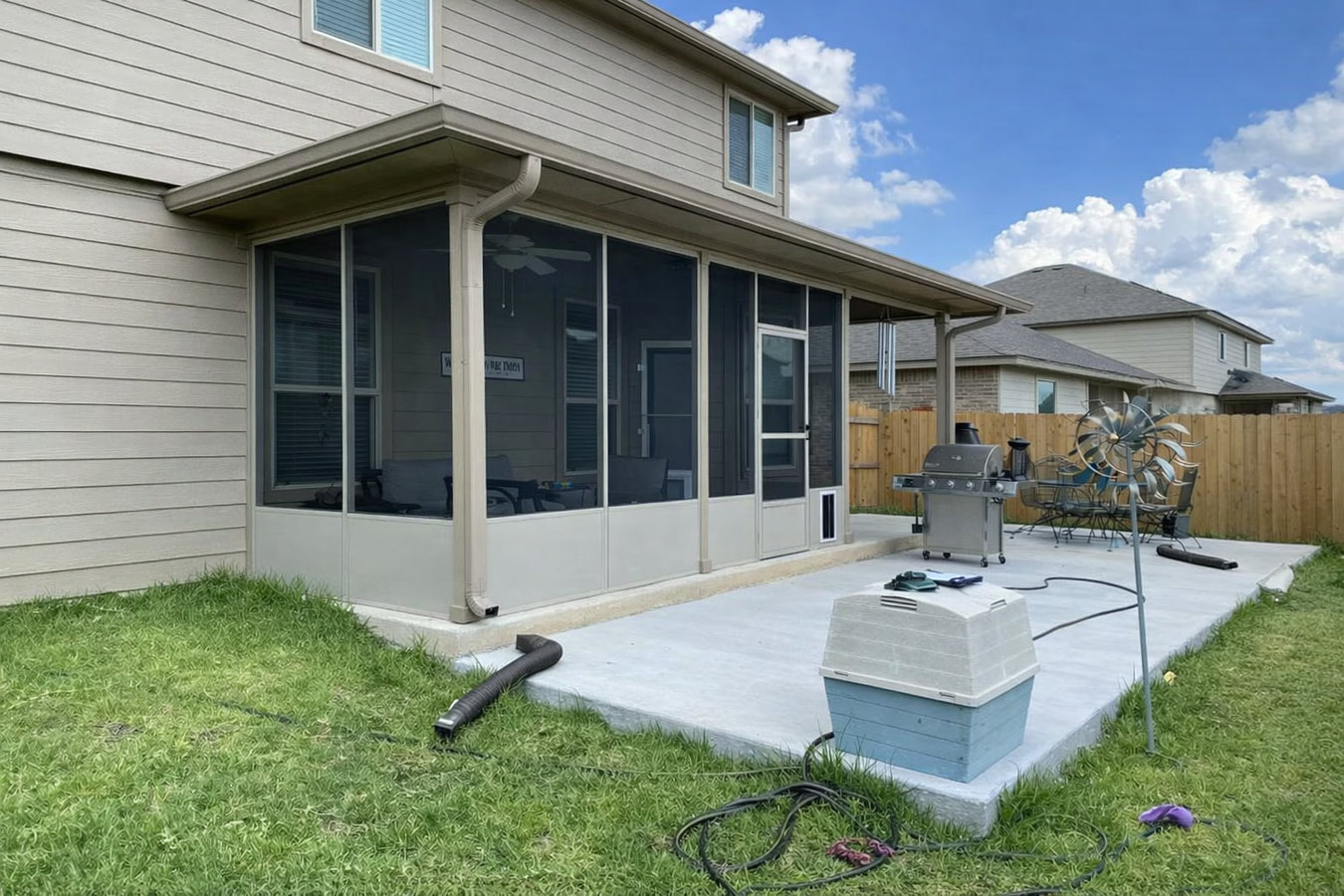
Your patio should be a room you actually use. We build screened enclosures in Torrance that keep bugs out, block afternoon glare, and hold up to the coastal environment for years.
Screen room installation in Torrance turns an existing patio slab into a fully enclosed outdoor living space - the room attaches to your home, uses screens instead of glass walls, and most residential jobs on an existing concrete pad are complete within two to five days of active construction.
A screen room sits between an open patio and a fully enclosed sunroom. You get fresh air, natural light, and a view of your yard, without direct sun, bugs, or the coastal wind that can make Torrance evenings less comfortable than they should be. The cost is significantly lower than a glass sunroom, and the project disrupts your routine for days rather than weeks. If you are considering a screen room but want to understand how it compares to patio enclosures with glass panels, we are happy to walk through both options with you.
For homeowners who want more protection from Torrance's afternoon sun and marine layer moisture, a patio-to-sunroom conversion may be worth considering - a fully enclosed, climate-controlled room that turns your outdoor space into a year-round interior living area.
If your backyard patio goes unused most evenings because mosquitoes show up at dusk or afternoon glare makes it unbearable, a screen room solves both problems at once. Torrance's coastal breeze makes the outdoor temperature genuinely pleasant for much of the year - the barrier between you and enjoying it is usually bugs and direct sun, not heat. A screen room turns that unused slab into a space you want to be in.
If the patio cover or awning attached to your home is sagging, shows visible rust or rot at the connection points, or has pulled away from the exterior wall, that structure has reached the end of its useful life. Rather than replacing like-for-like, many Torrance homeowners use that moment to upgrade to a fully screened enclosure that adds more livable space and more value. A contractor can often use the existing footprint as the starting point.
Torrance's coastal humidity - especially during the June Gloom season - creates conditions where outdoor cushions, rugs, and wood furniture develop mildew faster than in drier inland areas. A screen room keeps your outdoor furniture protected from direct moisture while still allowing airflow, which dramatically slows mildew growth. If you find yourself dragging cushions inside every time the marine layer rolls in, a screened enclosure is a practical fix.
If your back door is a revolving entry point for insects, leaves, and whatever the dog dragged in, a screen room creates a useful buffer zone between the yard and the house. It gives kids and pets a contained outdoor space without direct access to the interior. Many families find it changes how they use the back of the house entirely.
Every screen room project we take on starts with a look at your existing patio, the condition of the slab, and how the structure will connect to your home. From there we can go in several directions - a fully screened enclosure with a screened ceiling for maximum airflow, a solid insulated roof with screened walls for better shade and rain protection, or a replacement build on the footprint of a failing patio cover. We also offer a screen-to-glass upgrade path for homeowners who want to start with a screen room now and have the option to add glass panels later without rebuilding the frame.
Screening material choice matters more than most homeowners expect. Standard fiberglass mesh is the most affordable option, but solar-shade screen blocks a meaningful portion of the sun's heat while still allowing airflow - a genuine benefit in Torrance afternoons. Pet-resistant screen holds up to claws and pressure that standard mesh cannot handle. We bring samples to the estimate visit so you can make that decision before we order anything. For homeowners who want to see the full range of what is possible with their outdoor space, our patio enclosure and patio-to-sunroom conversion pages cover the more substantial options.
Best for homeowners who want an open-air outdoor room that keeps bugs, direct sun, and wind out while still feeling connected to the yard.
Best for homeowners who want shade and rain protection overhead, with screened walls for ventilation and an open-air feel.
Best for homeowners replacing a failing patio cover with a better-built, fully enclosed structure on the same footprint.
Best for homeowners who want to start with a screen room now and have the option to upgrade to glass panels later.
Torrance sits close enough to the coast that the outdoor air is genuinely comfortable for more months of the year than almost anywhere else in the country. The marine breeze keeps temperatures from getting extreme, which means a screen room here is usable from morning coffee to evening dinner without needing air conditioning. That same coastal air does bring challenges - salt from Santa Monica Bay accelerates corrosion on metal frames, and the June Gloom moisture cycle is hard on outdoor furniture. The right frame material and a screened roof that protects furniture from direct moisture make a real difference in how long the structure and everything inside it lasts.
The housing stock also shapes how these projects come together. Most Torrance homes were built in the 1950s and 1960s with concrete slab foundations and older patio coverage. Homeowners in areas like Hawthorne and Gardena deal with similar housing stock and similar questions about existing slab condition. We assess your slab before committing to any design because a screen room built on a compromised slab will shift and pull away from the house over time - and we would rather find that out at the estimate stage than mid-project.
You call or submit a request and we schedule a visit within a few days. We measure your patio, assess the existing slab and the house wall where the room will attach, and give you a written estimate - you should have that in hand within one business day of our visit.
Once you sign a contract, we submit the permit application to the City of Torrance's Building and Safety Division. This typically takes two to four weeks. During that window we order your materials so everything is ready to go when the permit is approved.
The crew installs posts and frame first, anchoring them to the slab and house wall. Then the roof structure goes on. This phase usually takes one to two days and is the noisiest part of the project. Being available by phone is all that is required.
With the frame in place the crew stretches the screening and installs the door. The city inspector then visits to check the completed structure - we coordinate that appointment. We finish with a walkthrough together so you can inspect every panel and corner before we close out the job.
No commitment required. We visit your patio, assess the slab, and give you a written quote covering permits, materials, and labor - usually within one business day.
(424) 318-3290We build screen room frames from powder-coated aluminum as the standard for all Torrance projects. Salt air from Santa Monica Bay accelerates corrosion on bare steel and untreated wood - the right frame material means your screen room looks good and stays solid for a decade or more without constant maintenance.
We handle the Torrance building permit application and help you navigate HOA review if your neighborhood requires it. Many Torrance neighborhoods - including areas like Southwood and Hollywood Riviera - have active associations with architectural review requirements that can add weeks to your timeline if you are not prepared.
Many Torrance homes were built in the 1950s through 1970s, and older concrete slabs can have cracks or low spots that affect the long-term stability of a screen room. We assess your slab before quoting a final price so there are no surprise cost increases mid-project.
We carry multiple screening materials and walk you through the options before ordering. Solar-shade screen reduces glare and heat - a meaningful benefit given Torrance afternoons. Pet-resistant screen handles claws and pressure without tearing. You choose based on your specific situation, not a contractor default.
Under California law, any contractor doing permanent structural work on your home must hold a current license from the California Contractors State License Board. You can verify any contractor's license in about two minutes on the CSLB website - a step worth taking before you sign anything. Licensing also gives you specific consumer protections, including limits on how much a contractor can ask for as a deposit before work begins. For guidance on screening materials and frame options, the Phifer Wire Products site is a reliable reference for understanding the differences between fiberglass, solar-shade, and pet-resistant screen before you talk to any contractor.
Go beyond a screen enclosure and convert your patio into a fully enclosed, climate-controlled sunroom with glass panels and a finished interior.
Learn MoreGlass-panel patio enclosures offer a step up from screens - more weather protection, better insulation, and a room that functions like interior living space.
Learn MorePermit slots fill up - locking in your start date now means your screen room is ready before summer. Call or send a message to get started.